Αποστολέας Θέμα: Seiko Calibers  (Αναγνώστηκε 35179 φορές)

0 μέλη και 1 επισκέπτης διαβάζουν αυτό το θέμα.

Αποσυνδεδεμένος george_

  • Administrator
  • GWF
  • *****
  • Μηνύματα: 156538
  • kk
    • Προφίλ
Απ: Seiko Calibers
« Απάντηση #45 στις: Ιανουάριος 17, 2015, 14:18:06 μμ »
The Legacy of Seikosha


For nearly four hundred years Edo-Tokyo has been the center of Japanese horological craft, and it is the birthplace and home of the great Japanese wristwatch manufactures of the last century -- Seiko and Citizen. Their history is irrevocably intertwined with that of the great city -- a city that has been repeatedly damaged and destroyed in a series of disasters that rivals the Godzilla movies for their frequency and carnage. Yet it and they have not only survived, but indeed flourished.

While Citizen has almost wholly embraced quartz technology to the exclusion of mechanical movements and watches, Seiko has continually maintained its mechanical tradition. The quartz revolution which they fostered and which is the foundation of their present prosperity, has enabled Seiko to continue to produce mechanical pocket watches, wristwatches, and the movements within. It is with Seiko that we are primarily concerned here.

It was only after 102 years that K. Hattori & Co., Ltd. finally changed its name to Hattori Seiko Co., Ltd. in 1983, and then to Seiko Corp. in 1990. The 108-year legacy of Seiko as a manufacture dates back to the original Seikosha factory in 1892, which was moved and renamed Daini Seikosha in 1937, then renamed Seiko Instruments and Electronics in 1983, finally becoming the present Seiko Instruments Inc. in 1987. The Seiko Group now consists of Seiko Corp., Seiko Instruments, Inc., and Seiko Epson Corp. -- as well as over fifty subsidiary companies.

Even after all of these years the three core companies continue to maintain their traditional relationships: Seiko Corp. markets and sells the watches produced by Seiko Instruments, just as "K. Hattori & Co." did for "Seikosha." The youngest member of the triumvirate, Seiko Epson, is responsible for the development of new technologies. Today the Seiko Group companies are spread throughout Tokyo's industrial belt, from Tokyo proper to the adjacent Chiba prefecture, and they remain under the guidance of members of its founding family -- something rare overall in the world horological industry.


In attempting to understand present day Japanese mechanical watches, first we must begin with the Japanese manufactured movements that are currently based upon. Unless otherwise noted, all movements listed are designed and manufactured by Seiko Instruments, Inc. Note that a complete listing and description is available in the appendix of The Seiko Book by Tokuma Shoten. Since I don't have access to that volume, I have had to compile this from available sources and it may be incomplete or contain some errors on my part.

7S Series Calibres

These are the most prolific mechanicals produced by Seiko, and incidentally they are the only Seiko mechanical regularly imported into the US by Seiko USA. Technically the 7S calibres are very simple and efficient bi-directional winding automatic movements that have no provision for handwinding. The 21 jewel 7S26 is the most common variant, found from the US to Malaysia.

Les common is the 23 jewel 7S36 which is generally only seen in Japan, though occasionally encountered in western markets. I suspect that the two extra jewels are for the auto-winding gear train. Both 7S calibres run at 21,600 vph, have day and date displays, and have a flat matte, nickel-plated finish. Unlike the rest of Seiko's mechanical movements, the 7S26 is primarily manufactured outside of Japan by a subsidiary in Singapore, though some - particularly the 7S36 variant - are manufactured in Japan, as is the 7S55, the final and rarest member of the 7S family. The 7S55 has only been used in a single collection of watches exclusive to Japan.

4S Series Calibres

First introduced in 1992, the 4S calibres make up the "bread and butter" of Seiko's mechanical movements. They are a diverse group of automatics and handwinds which are actually based on a single Seiko ebauche. It should be noted that all Seiko automatics above the 7S level can also be wound by hand.

The base movement of the 4S series is the 4S15 (shown above), a 25 jewel automatic with center seconds and date calendar. It runs at 28,800 vph, has a flat brushed finish except for the rotor which is finished with colimaconnage, is nickel-plated, and has cap jewels on both the escape and fourth wheels -- a nice touch which dates back to the early Seiko "Chronometers" which often featured cap jewels all the way to the center wheel. The use of colimaconnage is also a Seiko tradition that dates back to the Grand Seiko automatic movements of the 1960s. The 4S15 is essentially a reissue of their 52 series calibre from the 1970s, originally used in their premium King Seiko line. It is probably the highest quality simple automatic movement at this price point in the world (35,000 to 45,000 Yen). Calibre 4S12 is a variant of the 4S15 with an additional 24-hour GMT hand.

The basic 4S handwind, calibre 4S24, is a 21 jewel center-seconds movement. Simply put, it is calibre 4S15 with the automatic winding removed (akin to the relationship between Blancpain calibres 1161 and 1106). In removing the rotor and winding gears, the simple three-bridge top plate of the 4S15 is further simplified into a two-bridge 3/4 plate architecture. It has a simple flat matte and rhodium plated finish. Calibre 4S28 is a 24 jewel version of 4S24 with indirect subsidiary seconds indication. Finally, the 4S79 in a 29 jewel variant with indirect subsidary seconds and power reserve indication.

The 4S7x series was first introduced in 1995 for Seiko's mechanical luxury watches and is comprised mostly of automatic movements based on the 4S15. The basic movement is the 25 jewel calibre 4S71, with center seconds and no date. Calibre 4S77 adds a date subdial, retrograde day display, 24 hour GMT subdial, and three jewels. Calibre 4S79 adds a power reserve indicator, small seconds display, and four jewels. The only handwind, calibre 4S79A, is a 31 jewel certified chronometer with power reserve and small seconds display based on the 4S29. The automatic movements have a colimaconnage and gilt finish, and the handwind is finished with "Tokyo Stripes" and is also gilt.

6S Series Calibres

Launched in 1998, the 6S calibres are Seiko's three-register column wheel chronographs, both automatic and handwinding. Calibre 6S78 is a 34 jewel automatic chronograph with date calendar. At 7.2mm thick and 28.4mm in diameter it is a robust movement. The 35 jewel hand-wound calibre 6S74 has no date calendar but adds a power reserve display, and the 40 jewel automatic calibre 6S77 has both the power reserve display and calendar date window. The automatic movements in this series are finished with brushing on the plates and colimaconnage on the rotors, and the manual-wind is finished with Tokyo Stripes. Calibre 6S99 is the skeletonized version of calibre 6S74. All four movements are gold-plated. Calibre 6S37 is a recent variant of calibre 6S77 which is rhodium plated rather than gilt.

68 Series Calibres

The 68 series is comprised entirely of thin hand-wound movements. Calibre 6810 is a 22 jewel tonneau-shaped calibre, finished with Tokyo Stripes and rhodium plating. First seen in 1993, calibre 6870 is a 21 jewel movement with only hour and minute indications. Based on the earlier 6870, ultrathin calibre 6898 is 1.98mm thick -- thinner than Piaget's ultrathins, but thicker than those of Jaeger-leCoultre and Frederic Piguet. The 6898 is finished with Tokyo Stripes, gold-plating, and a voluted ratchet wheel. Indirect small seconds display adds 5 jewels for a total of 26. Calibre 6899 is the skeletonized and engraved version of 6898 -- available gilt or rhodium plated. The 68 calibres run at a 21,600 vph beat rate, and all feature cap jewels on the escape, fourth, and third wheels.

9S Series Calibres

The premium simple automatic calibre of Seiko's mechanical collection, 9S production is limited to 300 units per month -- a tiny number for a manufacture that makes over 30 million watches per year. The 9S series centers around very robust simple automatic movements built on the same scale as Rolex's 31xx series calibres. The 26 jewel calibre 9S55 is 5.3mm thick and 28.4mm in diameter, with center seconds and calendar date indication. The 24 jewel calibe 9S51 is simply a 9S55 without date window. The 20 jewel 9S54 is a hand-wound variant with center seconds and no date function, featuring a split 3/4 top plate. All 9S movements are finished with Tokyo Stripes and rhodium plating, and are adjusted to six positions.

8L Series Calibres

The 8L75 is an unadjusted and more simply finished variant of the premium calibre 9S55 (akin to the relationship between Chopard's LUC 3.96 and 1.96). It has a brushed and gilt finish, with colimaconnage on the rotor. The final 9S55 variant is calibre 8L35. Like the 8L75 it is unadjusted, but rhodium plated rather than gilt. The last member of the 8L family is calibre 8L34, a variant of calibre 9S54. With no change in jewel count, the 8L34 features subsidary seconds rather than central seconds.

Looking Forward

On November 17th of 1998 Seiko received a patent for new handwound tourbillon calibre with an offset screwed balance wheel (like the Blancpain calibre 23). The tourbillon cage upper plate which bridges the balance and escape wheel is shaped as a monogram "S." An unusual factor of the cage design permits adjustment and regulation with the cage assembled, using a special jig. Conventional tourbillons must be disassembled for any adjustment of accuracy -- a large factor of the great expense of tourbillon watches. The cage is also an ultrathin design, attempting to circumvent the bloating common to most tourbillon calibres.

A Note on Citizen:

As the unrivaled titan of world quartz watch production they have largely dispensed with the mechanical anachronism. However their Miyota subsidiary continues to produce mechanical calibres in addition to their primary production of quartz wristwatches, quartz modules, and other technological components. The mechanical movements are used in a small number of Citizen watches, and are sold as ebauches to foreign brands like Invicta and Zeno. The mechanical calibres consist of the 8200 and 8215 series 21 jewel 21,600vph automatics -- Citizen's counterpart to Seiko's 7S26. There is also at least one small auto calibre for women's watches.

A Note on Orient:

Another little-known Japanese manufacture (now owned by Seiko) whose broad range of watches is little seen in western nations. Focused mostly on the "economy" price point, they produce everything from simple handwinds and automatics to some basic complications, as well as more expensive line based on 3/4 plate movements.


The Seiko collections reflect the spirit of Tokyo in their combination of the modern, avant-garde and conservative -- an almost hodge-podge diversity. The most common and accessible are the classic Seiko 5 watches which are available all over the world. Using the same calibre 7S26, the very popular Seiko Diver automatic (shown above), is also widely available outside of Japan. Less common Seiko 5 variants only found in Japan include the Seiko 5 Sports and Seiko 5 Superior lines, which use the slightly improved 7S36 and 7S55 automatic movements.
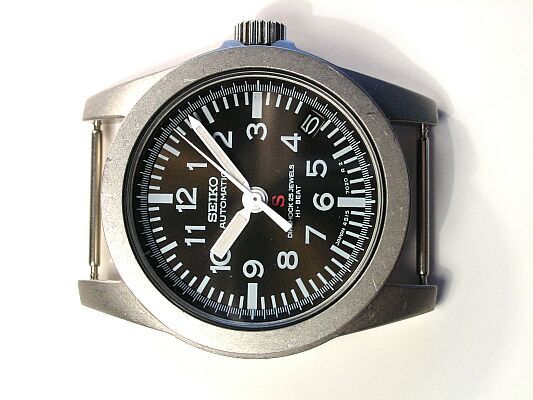


Also largely restricted to Japan, but occasionally found in Hong Kong or Singapore are a number of sports watches based on the 4S15 automatic. These include the popular Alpinist (also known as the "Sports 200" in the ex-Japan Asiana market) which has a rotating inner compass ring, a little known 200m titanium-cased diving watch, and a few over-designed models in the SUS and S-WAVE lines that are best left in obscurity. Alas the SUS "Military," which has gained a small following amongst military watch collectors, has been discontinued for some time (shown above).

There are also a number of accessible, classically styled watches based on 4S movements, including two handwinds, an automatic, and a few pocket watches. Within the Alba "Vient" collection there are also handwound tonneau and cushion-shaped watches. At a price point high above all of these, is Seiko's least expensive ultrathin mechanical watch. Interestingly, this round watch uses the form calibre 6810 which is displayed through a sapphire back. All of these watches are fitted with leather straps.

Seiko has recently introduced a new series of limited edition watches based some of the landmark wristwatches of its past. The first watch in the Historical Collection is based on the first wristwatch ever produced by Seikosha in 1913, the Laurel wristlet watch. Using the handwound calibre 4S28, the wristlet features a baked enamel dial. An elaborate leather bracelet-strap hints at the miltary function behind the original design. Also returning in the Historical Collection is the King Seiko (cal. 4S15), the Diver Pro 300m (cal. 8L35), the titanium Diver Pro 600m (cal. 8L35), and a classic lepine pocket watch (cal. 8L34).

The final mechanical watch under the general Seiko umbrella, and the only regular production mechanical watch within the Prospex collection, is the Marinemaster Diver Pro 300m. Using calibre 8L35, it is based on the 300m Diver Pro of the Historical Collection, but adds a hefty bracelet in place of the latter's rubber strap. The gilt hands and markers of the Historical model are replaced with white metal on the Marinemaster. The watch is quite large at some 45mm in diameter and 15mm in thickness.


Seiko's Credor collections actually date to 1974 when they were introduced as high-end quartz watches in gold cases, and it wasn't until 1996 that mechanical movements were finally introduced to the line. For the most part, the Credor "Mechanical" collection consists of 18k gold watches with guilloche dials, featuring one or more complications based on the higher-end 4S calibres and the 6S chronographs, including power reserve, and dual-time displays. This collection also features the only "Chronometer" produced by Seiko, several ultrathins, and limited edition skeletonized handwound chronographs. All watches in this collection are fitted with leather straps.

The Credor Pacifique collection of bracelet watches also features a few of the complicated movements used in the pure mechanical line. The dials of these watches also feature guillochage engraving. Their cases and integrated bracelets are made in steel, or steel with gold accents, with only a limited edition skeletonized handwound chronograph encased in 18k white gold.

Another all mechanical collection is the small Credor Phoenix line. Aside from the surprising number of limited editions, there are really just two basic watches: A 6S-based automatic chronograph and a 8L75-based automatic (shown above). They are made in both steel and titanium versions. In my opinion, the high fundamental quality of the calibres combined with simple functional finishing, and the high quality case and bracelet construction, makes the Phoenix collection the best value in the Seiko mechanical lineup.

The crown jewel of Seiko's mechanical watch production and the proudest heir to the Seiko mechanical tradition is the Grand Seiko automatic. A series of chronometer grade watches dating back to 1960, the latest duo based on the new 9S calibres were introduced in 1998. With production limited to 300 units a month, they are relatively rare even within Japan.

The Grand Seiko automatic is offered as either a steel watch on a steel bracelet, or as a gold watch on a leather strap. Seiko's propensity for limited editions has led them to produce a version of the steel watch with a display back and engraved rotor, and a white gold version of the strap watch also with a display back and gold medallion inset on the rotor, both for the 40th anniversary of the Grand Seiko line. The latest addition to the Grand Seiko family is a hand-wound model of classic Calatrava-like simplicity.


Seiko's mechanicals for the most part are not and have not been "fine" watches, but instead the "mid-tier" of practical and dependable watches based upon simple and robust movements. That they can produce fine watches has been demonstrated by a few select models - particularly their ultrathins - but the nearly 90-year history of Seiko's mechanical wristwatch production has been focused on functional and useful handwinds, automatics, and chronographs.

In truth, I do not expect that the mechanical watches of Japan can or will ever attempt to break the near hegemony of Switzerland on the luxury timepiece market. Its best arts are limited to the archipelago, and even there the market for mechanical watches is dominated by Swiss imports. Neither do I expect that these watches will be generally afforded the respect and recognition that I think they merit. But the changing nature of the global market has at least begun to make them available outside of Japan - despite Seiko's self-imposed isolation - to those who do appreciate them. Happily, I expect that there will always be a few foreign afficianados of the old manufacture in Tokyo.

(http://people.timezone.com/library/cjrml/cjrml0024)

Special thanks to Bob, Wayne Lee, and Kohei Saito.

Photo Credits:

Space Shuttle image of Tokyo courtesy of NASA
Diver automatic and Credor Phoenix by Wayne Lee
SUS "Military" and calibre 4S15 by Bob
Thunderstorm at the foot of the mountain by Hokusai; scan by Mark Harden

Used with permission.


(Θα ακολουθήσει και μετάφραση με την πρώτη ευκαιρία... καλή ανάγνωση)
ολα σε ενα,μπραβο Αλεκο
friendly
0
funny
0
like
0
wow
0
No reactions
No reactions
No reactions
No reactions

Αποσυνδεδεμένος Βost

  • Master
  • ****
  • Μηνύματα: 12468
  • Και τα όνειρα μια μέρα θα πάρουν εκδίκηση...!!!
    • Προφίλ
Απ: Seiko Calibers
« Απάντηση #46 στις: Ιανουάριος 21, 2015, 16:46:06 μμ »
Seiko 7S26

7S26 is one of the most popular modern automatic watch movements from Seiko. Other closely-related members of this 7S family include the 7S35, 7S36, and 7S55, along with letter revisions of the 7S26.

The 7S26 family was introduced in 1996 as a mainstream automatic watch movement, replacing the Seiko 7002 in many cases. Although earlier Seiko calibres featured quickset date, the 7S26 adds a counter-clockwise quickset day feature as well.

It is almost totally different from earlier Seiko 7002 series calibres, though it does continue the "Magic lever" bi-directional winding design. Rather than using a dedicated winding bridge to locate the lever, the 7s26 family locates it with a brass bushing on one side and the rachet wheel on the other. The keyless works have been relocated from the top plate to the bottom plate, making it easier to service these components from the back plate rather than removing the entire works. The two added jewels, compared to its predecessor, support the third wheel and escape wheel.

This family is non-hacking and not capable of hand winding, unlike its replacement, the Seiko 4R35 family.

Variants

The 7S26A was the original movement, introduced in 1996. It was revised with an Etachron regulator in 2006, becoming the 7S26B. Another revision, the 7S26C began appearing in 2011. The 6R15 family was introduced in 2006 as a high-end derivative of the 7S26B, including the Etachron regulator and coming complete with a longer power reserve thanks to its Spron 510 mainspring. In 2008, Seiko introduced the 4R15/4R16, which were based on the 6R15 but lack the hacking and hand winding features. Finally, Seiko released the hacking/hand-winding 4R3x series which also lack the Spron 510 mainspring. These are sold as an upmarket alternative to the 7S26C, also released in 2011.

Like most Seiko movements, the 7S26 family operates at 21,600 vph. All models feature sweep hour, minute, and seconds hands. The 7S26 and 7S36 feature both day and date in a window, while the 7S25, 7S36 and 7S55 have only a date window. The 7S26 and 7S25 have 21 jewels while the 7S35, 7S36, and 7S55 have 23 jewels. The 7S55 is identical to the 7S35 except for a rotor decorated with Tokyo stripes for limited use in a line of Seiko 5 Superior watches from the late 1990's.


Seiko 7S Family

The following movements were all based on the Seiko 7S26 movement.


(http://www.watch-wiki.net/index.php?title=Seiko_7S26)
friendly
0
funny
0
like
0
wow
0
No reactions
No reactions
No reactions
No reactions
Be with the people who bring out the best in you...

Αποσυνδεδεμένος Βost

  • Master
  • ****
  • Μηνύματα: 12468
  • Και τα όνειρα μια μέρα θα πάρουν εκδίκηση...!!!
    • Προφίλ
Απ: Seiko Calibers
« Απάντηση #47 στις: Ιανουάριος 21, 2015, 16:50:10 μμ »
Seiko 4R36 -The Family In Brief

In the past, Seiko have resurrected long discontinued calibres – the notable such reintroduction being the 4S15 (originally the 5246) which itself was received with much aplomb given its high beat of 28,800 bph, it’s hacking ability and the hand winding.  The 5246 was itself a very high grade calibre, more than capable of chronometer accuracy; indeed, it was utilised in various KS (King Seiko) models with official certification.  Having owned various models so equipped, I had a love hate relationship with the 4S15- it was extremely hard going to handwind and the indirect central seconds often resulted in an annoying jitter of the seconds hand.  Nice movement all the same!

The Seiko 4R36 et al movements appeared sometime during mid 2011 and much excitement ensued simply for the fact that Seiko was now equipping relatively run of the mill watches with a movement capable of being handwound and hacked. Here and there on various watch fora have appeared pretty in depth posts regarding the construction of the ‘new’ 4R movements and I certainly wouldn’t attempt to replicate those here.  Suffice to say, the precursor to the 4R family was the 6R15 – and this movement was intially used to power the likes of the Japanese market SARB (Spirit) series, introduced late 2005 and the now highly regarded SBDC001 ‘Sumo’ dive watch, introduced early 2007.  The 6R15 was notable for the same reasons as the later 4Rs – hacking and handwinding; in addition, the 6R15 featured a Spron 510 mainspring which gave the calibre a power reserve of over 50 hours once fully wound.

What is significant is that the 6R15 was a development of the venerable 7S26, Seiko’s workhorse movement which has been powering bread and butter 5s since 1996.  Thus, it wasn’t a reintroduction (as per the 4S15), it was a re-engineering of an existing, well proven calibre in order (arguably) to bring Seiko’s mid range offerings into the territory of basic ETA 2824 equipped watches.  As is the way with Seiko, the 7S26 has been developed during ts lifetime, starting with the A variant (1996-2006) and progressing through the B (late 2006-2011) to the current C version (late 2011 onwards).

Likewise, the 6R15 is now on its third variant (C) since first appearing in late 2005.  For clarity, we should really start with the 7S25 as this calibre is date only (as is the 6R15). Confusing?!

A quick (not fully comprehensive) 7S26/6R15/4R** timeline might help:

Mid 1996 – 7S26A introduced

Late 2005 – 6R15A introduced, based on the 7S with Etachron regulator and Spron 510 mainspring

Late 2006 – 7S26B introduced with Etachron regulator

Late 2006 – 6R15B introduced – new parts:

the barrel and train wheel bridge
the movement barrel (complete)
the centre wheel & pinion
the ratchet wheel
the oscillating weight
the ratchet wheel screw
Mid 2008 -4R15 and 4R16 introduced, based on 6R15 but minus manual winding and hacking

Mid 2011 – 4R36A introduced along with other variants (35, 36, 37, 38 & 39)

Late 2011 – 6R15C introduced – changes:

addition of one jewel on main plate (thus, 23 to 24 jewels)
modified ratchet sliding spring
modified date indicator maintenance plate
new balance wheel
new barrel
Late 2011 – 7S26C introduced – changes to date mechanism, plates, balance cock, changes to pinion heights for better hand clearances

So where does the 4R series fit in to all this?

Well, sometime during mid-late 2008 the first 4Rs, in the guise of the 4R15 and 16 appeared (notably the 4R15 in the Seiko SRP043 ‘Spork’ dive watch). Models were prefixed SRP and the watch designs were a step above everyday Seiko 5s; indeed, the very first SRPs such as the SRP001 (with day date 4R16) were fitted with solid link bracelets (including endlinks) and sapphire crystals. Some sellers marketed the watches under the ‘Superior’ moniker which Seiko itself had officially used in the mid 1990s with 4s15/sapphire equipped watches.  I am not sure if Seiko themselves are marketing these as ‘Superiors’.

At first sight, (apart from being slightly more visually attractive with decorated rotor) the 4R15 is a 7S. In essence, however, the 4R15 is a 6R15 with the hacking and handwinding facilities removed – the 50 hour power reserve remains courtesy of the Spron 510 mainspring.  It could be argued that the 4R15 is therefore simply a 7S25 with an upgraded mainspring!  The whole journey from 7S series through 6R to 4R is quite complicated but it would seem that if there were any purpose to all these swings and roundabouts, then such purpose has become apparent relatively recently and would at the time of writing relate to the establishing of a degree of parts commonality between the three series of calibres.  This wasn’t always the case of course but does now seem to be so.

If we look back at the introduction of the 7S26B back in 2006, the base movement had been in production for a decade with no real changes. The major difference was a complete redesign of the regulator which was now of the Etachron type.  In essence, this would allow for finer or ‘better’ adjustment of isochronism (in other words, it would accomplish more stable timekeeping despite a declining mainspring tension).  Indeed, initial reports of the performance of the 7S26B certainly indicated that out of the box timekeeping was somewhat better than the previous series.  This was all rather encouraging as the 7S series had become a firm, if not crude favourite over the years but was certainly not renowned for the best of accuracy without adjustment.  From personal experience the accuracy of the 7S26  in B guise was very much improved; I owned an SNKH63 which ran at +2 sec per day right out of the box.

The hairspring issue…

However, what was intended to improve the calibre turned out to be a little problematic in some cases; the design of the new regulator meant that the hairspring could be prone to jumping out of the regulator pin and becoming ‘hung up’ if the watch was subjected to any degree of shock.  The watch would then run crazily fast or stop altogether.  This problem was reported by many users with the quick and dirty fix (rightly or wrongly) being to slap the watch on the palm of one’s hand.  I have heard it mentioned that the issue itself may have simply been down to poor adjustment of the rotatable regulator pin at time of manufacture.
Whatever the cause, the issue has nonetheless been of annoyance to many people though I have never experienced it myself.  Some users surmised that the 6R15 (which shares the same regulator) wasn’t prone to the same problem as the hairspring itself was stiffer – I am unsure if this the case.  Turning to the 4R series, what I have read is that certainly in the case of the 4R36, the regulator pin itself has been lengthened to prevent the hairspring from jumping out, a PhilippineWatchClub forum post read as follows:

“I just came from the Seiko House at G5 this afternoon to have one of my pieces A-Graphed and regulated (took all of 52 seconds). While there, I had a short chat with the watch smith, a friend of mine for the past few years. He says the 4R36 movement is very similar to the 7S lines.

But the new movement has a longer regulator arm/neck to prevent the nearby hairspring from accidentally looping or slipping over that arm when the case gets “bumped” or “knocked”. The 7S “shortcoming”, he said, was that when the case suffers a strong bump, the hair spring jumps out of its placement and when it does this, the spring filament can, at times, go over the shorter 7S arm thus causing the watch to stop.”
So for 4R36 et al owners this would seem to be good news.  It should be noted also that within a very short time of the 4R36 being introduced, the 7S26 was uprated to the C series…with a new balance assembly (to negate the problems?) amongst other changes.

So…hopefully the hairspring issue is now a thing of the past, providing your watch has a 4R series movement or a 7S ‘C’.

The image at right shows the hairspring passing through the slot in the regulator pin; turning the pin anticlockwise achieves fine adjustment.

Current basic Seiko 5 models are therefore equipped with the 7S26C, some Seiko 5 Sports with 7S36C, more recent Seiko 5 Sports with the 4R36A and Japan domestic Spirit models with the 6R15C.

So to the current 4R series, including the now relatively common 4R36…

The 4R line up (all beat at 21,600bph):

4R15 – 22 jewels, date only, non hacking, non handwinding, Spron 510 mainspring
4R16 – 22 jewels, day date, non hacking, non handwinding, Spron 510 mainspring
4R35 – 24 jewels, date only (4R35 is now on B series, A series has 23 jewels), handwinding, hacking
4R36 – 24 jewels, day date, handwinding, hacking
4R37 – 24 jewels, date only, 24hr sub dial, handwinding, hacking
4R38 – 24 jewels, no date, open heart, handwinding, hacking
4R39 – 24 jewels, no date, open heart, 24hr sub dial, handwinding, hacking

There are no less than seven variants in the series which given their differing configurations, are suited to a variety of watch designs from basic dress to the ubiquitous Seiko Sports.  Certainly the introduction of the 4R series has gone hand in hand with the introduction of many new models; in the case of the 4R36, many Sports models with 100m water resistance.  Seiko has not chosen not to re-equip existing watches with the new calibre thus far, with the exception of the ‘Monster’ dive watches which have been given minor aesthetic changes, new model numbers and a commensurate price hike.

The exciting (?) thing is that finally there is a relatively mainstream Seiko watch that can be hacked and handwound – whether or not the 4R series find their way into mainstream Seiko 5 models remains to be seen. The image below gives the basic technical specification of the current 4R35 and 4R36 from Seiko.  Accuracy figures thus far reported online would indicate that Seiko are being somewhat pessimistic!  Note that the movements beat at 6 beats per second, not 5.

The new movement seems complete in way that it never was when the 7S26 was the mainstay – I could live without hacking and handwinding without problem – but it is nice to know that it is there if required.  Citizen’s 82** series movements have always handwound but not hacked, have indirect centre seconds and of course the rotor wobble associated with winding in one direction only; wonderful workhorse movements but for me, never quite Seiko quality (despite better accuracy).  The new Citizen / Miyota 9015 as used in the Smiths PRs-25 and now the PRS-68 is a whole lot better than the 82** but hard to find as yet in lower priced, relatively mainstream watches.

Seiko afficionados might baulk at some of the designs which have been released to encase the 4R36 and Seiko have gone the way of many manufacturers by releasing some very large (and ugly in my opinion) watches; thankfully (for me) not all are such, and a few of the post 2011 SRP releases have certainly caught my eye.

There are now quite a few SRP models to choose from and I have had a quick look at the model featured on the Seiko specification sheet pictured above in the form of the SRP135.

(http://watcharama.com/the-seiko-4r36-family-in-brief/)
friendly
0
funny
0
like
0
wow
0
No reactions
No reactions
No reactions
No reactions
Be with the people who bring out the best in you...

gkblues

  • Επισκέπτης
Απ: Seiko Calibers
« Απάντηση #48 στις: Ιανουάριος 21, 2015, 16:52:48 μμ »
Ποια ειναι η πιο σύγχρονη μηχανή των seiko;


Φιλικά .......Γιωργος
friendly
0
funny
0
like
0
wow
0
No reactions
No reactions
No reactions
No reactions

Αποσυνδεδεμένος george_

  • Administrator
  • GWF
  • *****
  • Μηνύματα: 156538
  • kk
    • Προφίλ
Απ: Seiko Calibers
« Απάντηση #49 στις: Ιανουάριος 21, 2015, 16:57:07 μμ »
Μπράβο Αλέκο
friendly
0
funny
0
like
0
wow
0
No reactions
No reactions
No reactions
No reactions

Αποσυνδεδεμένος Βost

  • Master
  • ****
  • Μηνύματα: 12468
  • Και τα όνειρα μια μέρα θα πάρουν εκδίκηση...!!!
    • Προφίλ
Απ: Seiko Calibers
« Απάντηση #50 στις: Ιανουάριος 21, 2015, 16:58:08 μμ »
Μπράβο Αλέκο
είχα υποσχεθεί στον Νικόλα και μετάφραση..αλλά βαρέθηκα  :D τπτ Γιώργο...εδώ είμαστε να μάθουμε και 5 πράγματα όχι μόνο διπλό πειρασμό  8)
friendly
0
funny
0
like
0
wow
0
No reactions
No reactions
No reactions
No reactions
Be with the people who bring out the best in you...

Αποσυνδεδεμένος Βost

  • Master
  • ****
  • Μηνύματα: 12468
  • Και τα όνειρα μια μέρα θα πάρουν εκδίκηση...!!!
    • Προφίλ
Απ: Seiko Calibers
« Απάντηση #51 στις: Ιανουάριος 21, 2015, 17:02:53 μμ »
Ποια ειναι η πιο σύγχρονη μηχανή των seiko;


Φιλικά .......Γιωργος
τώρα δεν ξέρω αν έχω μείνει πίσω...αλλά νομίζω Caliber 8X82 σε Seiko Astron και σε μηχανικές καλίμπρες Grand Seiko caliber 9S86  ::)  ::)  ::)
friendly
0
funny
0
like
0
wow
0
No reactions
No reactions
No reactions
No reactions
Be with the people who bring out the best in you...

Αποσυνδεδεμένος george_

  • Administrator
  • GWF
  • *****
  • Μηνύματα: 156538
  • kk
    • Προφίλ
Απ: Seiko Calibers
« Απάντηση #52 στις: Ιανουάριος 21, 2015, 17:03:38 μμ »
Μπράβο Αλέκο
είχα υποσχεθεί στον Νικόλα και μετάφραση..αλλά βαρέθηκα  :D τπτ Γιώργο...εδώ είμαστε να μάθουμε και 5 πράγματα όχι μόνο διπλό πειρασμό  8)
στο δεύτερο θέμα, που αναφέρεται, μπορώ να πω ότι έχεις καταστρέψει γυναικόπαιδα!  :D
friendly
0
funny
0
like
0
wow
0
No reactions
No reactions
No reactions
No reactions

Αποσυνδεδεμένος Βost

  • Master
  • ****
  • Μηνύματα: 12468
  • Και τα όνειρα μια μέρα θα πάρουν εκδίκηση...!!!
    • Προφίλ
Απ: Seiko Calibers
« Απάντηση #53 στις: Ιανουάριος 21, 2015, 17:05:07 μμ »
Μπράβο Αλέκο
είχα υποσχεθεί στον Νικόλα και μετάφραση..αλλά βαρέθηκα  :D τπτ Γιώργο...εδώ είμαστε να μάθουμε και 5 πράγματα όχι μόνο διπλό πειρασμό  8)
στο δεύτερο θέμα, που αναφέρεται, μπορώ να πω ότι έχεις καταστρέψει γυναικόπαιδα!  :D
:D  :D :D  :D  :D το φόρουμ είναι και για να μαθαίνουμε αλλά και για να ξεφεύγουμε λίγο απο την καθημερινότητα μας...οπότε και πρέπει να τα εμπεριέχει όλα :)
friendly
0
funny
0
like
0
wow
0
No reactions
No reactions
No reactions
No reactions
Be with the people who bring out the best in you...

Αποσυνδεδεμένος Βost

  • Master
  • ****
  • Μηνύματα: 12468
  • Και τα όνειρα μια μέρα θα πάρουν εκδίκηση...!!!
    • Προφίλ
Απ: Seiko Calibers
« Απάντηση #54 στις: Ιανουάριος 21, 2015, 17:07:11 μμ »
Grand Seiko Roadshow - Spron Demonstration

friendly
0
funny
0
like
0
wow
0
No reactions
No reactions
No reactions
No reactions
Be with the people who bring out the best in you...

Αποσυνδεδεμένος Βost

  • Master
  • ****
  • Μηνύματα: 12468
  • Και τα όνειρα μια μέρα θα πάρουν εκδίκηση...!!!
    • Προφίλ
Απ: Seiko Calibers
« Απάντηση #55 στις: Ιανουάριος 21, 2015, 17:15:00 μμ »
The Calibre 9S86

Grand Seiko launched its hi-beat calibre 9S85 back in 2009. This particular self-winding movement has an usually high frequency of 36,000 vph (5Hz) and the Japanese watch company has used it as the basis for its new calibre, the 9S86, the first ever high-beat GMT from Grand Seiko.


Accuracy is a key attribute of all Grand Seiko movements and the 9S86 maintains this enviable reputation with a daily variation specified as -3 to +5 seconds per day.One reason I have become wholeheartedly bewitched by Grand Seiko is the engineering excellence and flawless finishing of its movements. The 9S86 proves to be no exception.


An uniquely shaped titanium oscillating mass is presented centre-stage. It exhibits an unusual hue, employing anodic oxidation to impart a comely gold tone. The rotor features several apertures which reveal some of the details beneath.However, I must confess I prefer the oscillating mass used in the non-limited versions of the Hi-beat 36,000 GMT. This is not due to any aversion to the gold tincture of the rotor within the limited edition model, but simply because the oscillating mass within the standard model reveals more of the beautiful bridges beneath and other fabulously refined micro-components.


The Calibre 9S86 fitted in non-limited edition models SBGJ001 & SBGJ003
 
The bridges are decorated with broad, straight stripes, similar in concept to Côtes de Genève or Glashütte Ribbing, but with a individual appearance all of there own.

(http://www.escapementmagazine.com/articles/grand-seiko-hi-beat-36000-gmt-limited-edition-sbgj005---in-depth-watch-review-by-escapement.html)
friendly
0
funny
0
like
0
wow
0
No reactions
No reactions
No reactions
No reactions
Be with the people who bring out the best in you...

Αποσυνδεδεμένος Βost

  • Master
  • ****
  • Μηνύματα: 12468
  • Και τα όνειρα μια μέρα θα πάρουν εκδίκηση...!!!
    • Προφίλ
Απ: Seiko Calibers
« Απάντηση #56 στις: Ιανουάριος 21, 2015, 17:18:47 μμ »
9S86 on Grand Seiko Hi Beat GMT SBGJ005

friendly
0
funny
0
like
0
wow
0
No reactions
No reactions
No reactions
No reactions
Be with the people who bring out the best in you...

Vagelis

  • Επισκέπτης
Απ: Seiko Calibers
« Απάντηση #57 στις: Ιανουάριος 21, 2015, 17:25:41 μμ »
Φοβερος Αλεκο!
Πολυ καλη δουλεια!
Εδωσες υλικο για διαβασμα και ονειρα!
friendly
0
funny
0
like
0
wow
0
No reactions
No reactions
No reactions
No reactions

Αποσυνδεδεμένος Βost

  • Master
  • ****
  • Μηνύματα: 12468
  • Και τα όνειρα μια μέρα θα πάρουν εκδίκηση...!!!
    • Προφίλ
Απ: Seiko Calibers
« Απάντηση #58 στις: Ιανουάριος 21, 2015, 17:28:26 μμ »
Φοβερος Αλεκο!
Πολυ καλη δουλεια!
Εδωσες υλικο για διαβασμα και ονειρα!
(Κάντε κλικ εδώ να εμφανιστεί η φωτογραφία.)
φίλε...αν και ευτυχώς με την Seiko υπάρχουν επιλογές για όλα τα πορτοφόλια ;)
friendly
0
funny
0
like
0
wow
0
No reactions
No reactions
No reactions
No reactions
Be with the people who bring out the best in you...

Αποσυνδεδεμένος george_

  • Administrator
  • GWF
  • *****
  • Μηνύματα: 156538
  • kk
    • Προφίλ
Απ: Seiko Calibers
« Απάντηση #59 στις: Φεβρουάριος 21, 2015, 14:58:46 μμ »
the 4R15 is closer to the 6R15 then the 7S series,

The 4R15 is a 6R15 with the hacking lever and the handwinding bridge removed, it retains the escapement and mainspring from the 6R15 allowing it to have a -15/+25 accuracy like the 6R15 and the 50h Power reserve like the 6R15.

The 4R35/6/7/8 is the other way around, its a 6R15 with the escapement and mainspring from a 7S series calibre, meaning that it has the -25/+35 accuracy and 40h power reserve from the 7S while retaining the hacking lever and handwinding bridge from the 6R15.

Supposobly theres a new version of the 6R15 which is the C variant, the B variant made it part compatible with the 6r20 calibre, the C variant makes it part compatible with the 7S calibre to be able to crank out the 7S, the 4R15, 6R35/6/7/8 and the 6R15 out of the same assembly line, you can tell apart the C variant becuase its 24 jewels like the 4R35/6/7/8 and not 23 jewels like the old 6R15.

In summery :
So basicly, all the calibres are 21,600 BPH except the 6R20 which is 28,800.

7S25/26/35/36 is a non hacking, non handwidning -25/+35 second accuracy 40h power reserve.
4R15/16 is non hacking, non handwidning -15/+25 second accuracy 50h power reserve.
4R35/36/37/38 is hacking, handwinding -25/+35 second accuracy with 40h power resereve
6R15 is hacking, handwinding -15/+25 second accuracy with 50h power reserve.
friendly
0
funny
0
like
0
wow
0
No reactions
No reactions
No reactions
No reactions